BookFunnel
BookFunnel.comBooks & Reference
4.21.09K Reviews
- Version
- Varies With Device
- Installs
- 1.00M
- Age Rating
- Everyone
Screenshots
Our Review of BookFunnel
 Analysis by Appyee
I came away from BookFunnel thinking of it less as a full reading environment and more as a practical bridge between the books I receive through BookFunnel and the reading app I already prefer. That distinction matters. If you have ever downloaded an ebook, searched through a crowded file folder, and then tried to work out which app should open it, this app gives that handoff a clearer place to happen.
BookFunnel is a free Books & Reference app from BookFunnel.com. Its main job is to help readers manage their BookFunnel books and send them to a favorite reading app. I tested it with that purpose in mind, paying particular attention to how easy it is to identify a book, move through the available controls, and continue reading in a way that suits different habits and abilities.
The app has been available since July 21, 2015, and its broad adoption is reflected in more than a million installs. It holds an average rating of 4.2 from roughly 3,700 ratings, with about 1,100 written reviews. Those figures suggest a mature, useful tool rather than an experimental reader, although they do not change the fact that its value depends heavily on how you obtain and read ebooks.
How BookFunnel fits into an everyday reading routine
I’d use this section to focus on the small choices that make the handoff feel routine rather than something to troubleshoot each time. A helpful habit is to settle on a reading app that suits your eyes and controls, then use the same destination whenever possible. That consistency matters most when you are tired or reading in a brief window, and it sets up a closer look at how the process works in practice.
A focused library handoff instead of another general reader
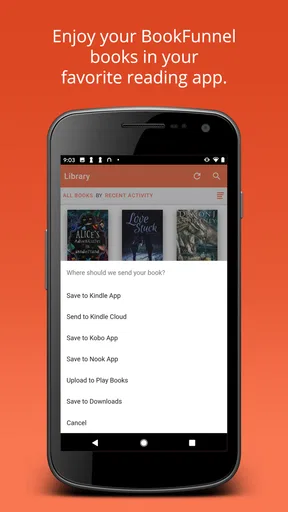
My first useful observation is that BookFunnel does not need to replace the reading app you already know. That is its strongest idea. Someone who likes a particular app for its font controls, background choices, syncing, or familiar page gestures can keep using it while BookFunnel handles the awkward step before reading begins.
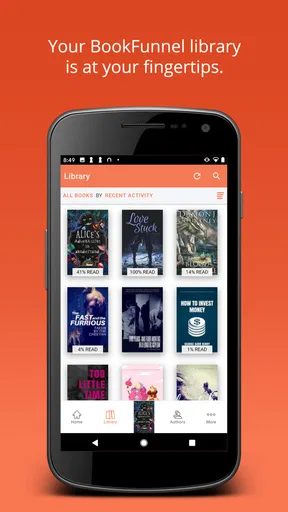
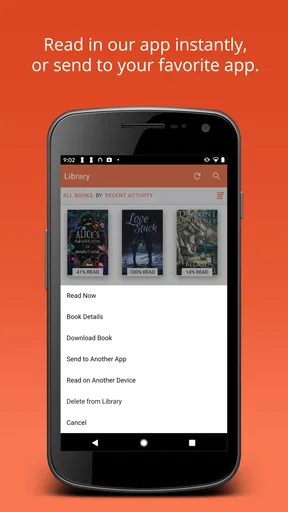
In a normal routine, I would open the app when I receive a BookFunnel title, locate the book, and choose where I want to read it. The benefit is not dramatic page-turning technology; it is the reduction of small decisions. Rather than treating an ebook as an anonymous file, the app keeps the BookFunnel side of the process organized enough to make the next action obvious.
This is especially helpful for readers who collect books from several authors or publishers using BookFunnel. A download folder can become confusing quickly, particularly when filenames are abbreviated or when several editions look similar. Keeping those titles connected to the service makes the transition to a preferred reader feel more deliberate.
Readability begins with the destination app
There is an important accessibility nuance here: BookFunnel’s reading experience is largely shaped by the app you send a book to. If your chosen reader offers adjustable text size, spacing, contrast, or a comfortable night view, those options may be more important to your day-to-day experience than BookFunnel itself.
That separation can be a strength. A person with low vision may already have a reading setup that works well, and there is no reason to abandon it just to receive a BookFunnel title. Likewise, a reader who prefers a simple interface can choose a less crowded destination, while someone who relies on advanced typography can continue with a reader built around those controls.
The trade-off is that BookFunnel is not a universal solution for reading comfort. It helps get the book where you want it, but it does not turn every destination into an accessible one. Before relying on it for a particular reading need, I would first confirm that the reading app you intend to use supports the text and display adjustments you depend on.
Navigation that favors recognition over file management
What I appreciate about the app’s purpose is that it encourages me to think in terms of books rather than downloads. That is a small but meaningful difference for anyone who finds device storage folders difficult to scan. A recognizable title is easier to act on than a list of files with unfamiliar extensions.
For users who are new to ebooks, the workflow is also less intimidating than manually moving files between folders. You do not need to begin by learning where a device stores downloads or how a particular reader imports them. The app gives the process a more approachable starting point, even though the final reading experience still belongs elsewhere.
That said, readers who want a large, all-purpose catalog may find the focus narrow. This is not the obvious choice for managing books from every possible source in one place. Its organization makes the most sense when BookFunnel is already part of your reading life.
Motor and sensory considerations in real use
For motor comfort, the key advantage is avoiding unnecessary file handling. Repeatedly opening a file manager, selecting a document, choosing an app, and repeating the process for several books can be tiring or frustrating, especially on a small touchscreen. A more direct handoff reduces the number of interactions involved in starting a book.
This does not mean every interaction will suit every reader. Touch controls, scrolling, and selection still depend on the device and the reading app receiving the book. If precise tapping is difficult, the destination app’s control layout becomes the deciding factor. BookFunnel can simplify the route, but it cannot redesign those controls.
For sensory needs, I found the most sensible approach is to treat BookFunnel as a low-distraction transfer tool and let the reading app handle presentation. Readers sensitive to bright screens, dense layouts, or visual clutter should choose their destination carefully. The app’s usefulness comes from preserving that choice rather than forcing everyone into one reading interface.
A practical tip is to decide on your preferred reading app before collecting a large number of titles. That way, each book can follow the same familiar route, and you are less likely to make a rushed choice when you are already tired, commuting, or dealing with a crowded screen.
Situational access: where the app earns its place
The clearest everyday scenario is receiving a book while using a phone away from home. Imagine downloading a title during a lunch break, with only a few minutes before returning to work. BookFunnel can make the next step more straightforward than searching through downloads and deciding which application should open the file. Once the book is sent to the reader you prefer, you can continue later without rebuilding the process.
It is also useful when moving between contexts. You might discover a book on one device and prefer to read it in an app with a more comfortable layout on another. The important question is not whether BookFunnel replaces every part of that process, but whether it gives you a clear starting point for managing the BookFunnel title and choosing the reading destination.
For people who read in short sessions, that clarity matters. A reader with limited energy may not want to troubleshoot file locations each time. Someone who uses a phone one-handed may value fewer steps. A person who reads in changing light may appreciate being able to send the book to an app already configured for those conditions.
There is another useful situation: helping a less technical reader begin with ebooks. Instead of explaining file extensions, storage folders, and import menus all at once, I would explain the BookFunnel app as the place to find the book, then show the reader app as the place to read it. That division makes the lesson easier to remember.
Three workflow tips that are easy to overlook
- Choose the reading destination before you need it. A consistent destination reduces decisions and makes the process friendlier for readers who benefit from predictable routines.
- Use the app as a starting point, not a storage strategy for everything. If your library includes books from many unrelated sources, keep expectations realistic and use the tools designed for those other collections.
- Check the handoff with one title first. Before building a reading habit around the service, send a single book to your preferred reader and confirm that its text display and controls suit you.
These tips reveal the app’s real strength: it works best when it is part of a prepared workflow. It is less impressive when treated as a magical fix for every ebook-management problem.
What may still create friction
The biggest limitation is the boundary between managing a book and reading it. If you expect one app to provide a complete library, deep typography settings, broad format support, and a unified collection from every source, this may feel incomplete. BookFunnel’s focused role is convenient, but that focus also means it cannot replace a strong dedicated reader.
There can also be a learning curve for people who do not understand why one app is needed to obtain a book and another is needed to read it. The concept is simple once explained, but the handoff may initially feel like an extra step. In my view, that is a communication problem more than a design failure, yet it still matters for first-time ebook users.
Readers who depend on a specific accessibility feature should also avoid assuming that the transfer itself guarantees a good experience. The final result depends on the receiving app, the device, and the reader’s own settings. If a book arrives but opens in an uncomfortable environment, the problem may be outside BookFunnel’s central function.
Another trade-off appears for people who prefer a single, carefully curated library. A dedicated reading ecosystem may offer stronger sorting, progress tracking, and cross-source organization. If those features are your priority, a general ebook manager or your existing reader may be the better home base, while BookFunnel remains a delivery tool.
Who should use it, and who should skip it?
I would recommend BookFunnel to readers who regularly receive books through BookFunnel and want a simpler route into a familiar reading app. It is also a sensible choice for people who dislike manual downloads, readers helping family members get started with ebooks, and anyone who values keeping the acquisition step separate from the reading interface.
It is particularly well suited to readers with established preferences. If you already know which app gives you the right text size, contrast, spacing, or navigation style, BookFunnel lets you keep that setup instead of forcing a change. That is a meaningful inclusive benefit, even without claiming that the app itself solves every accessibility requirement.
I would skip it if your books come mainly from other stores or library services and you want one universal collection. I would also look elsewhere if your main goal is an advanced reading environment rather than a clean way to move BookFunnel titles into one. In those cases, the dedicated reader or library manager you already use may offer more value.
My inclusive verdict after using the workflow
BookFunnel succeeds because it respects a useful division of labor. It manages the books associated with BookFunnel and sends them to the reading app that fits the reader. For different abilities and situations, that flexibility is more valuable than a one-size-fits-all interface: people can preserve familiar reading settings, reduce file handling, and choose a destination that matches their visual or motor preferences.
Its limitations are equally clear. The app is not the final authority on text comfort, navigation, or sensory presentation, because those qualities depend heavily on where the book is opened. Readers should test that complete path rather than judging only the transfer step.
Overall, I see BookFunnel as a useful, focused companion for a specific ebook workflow. It is free, rated for Everyone, and backed by the experienced developer BookFunnel.com. I would recommend it to anyone whose books arrive through the service, especially if manual file management gets in the way of reading. For a broad, all-source library or a feature-rich reading environment, I would keep looking. But within its intended role, it makes the journey from receiving a book to actually reading it noticeably easier.
Verdict
Strengths of BookFunnel
- Easy access to purchased ebooks across supported devices.
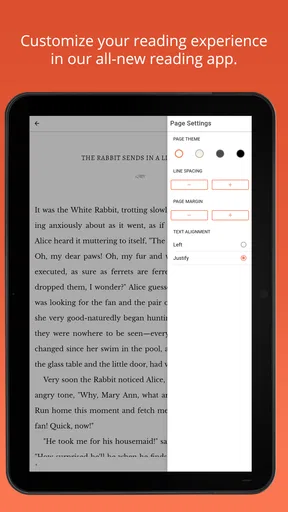
- Clean reading experience with adjustable text and display settings.
- Useful author pages make discovering independent books convenient.
- Download links are generally simple for less technical readers.
- Supports DRM-protected books from participating authors and publishers.
Limitations of BookFunnel
- Only books distributed through BookFunnel can be accessed in the app.
- Some titles may require separate reading apps or device setup.
- Availability of features can vary between authors and book formats.
- The catalog is not as broad as major ebook storefronts.
- Account or download issues may require contacting the individual author.
Similar Picks in This Category
View All
Google Play Books & Audiobooks
Google LLC4.7

네이버 - NAVER
NAVER Corp.3.5

Wattpad - Read & Write Stories
Wattpad.com3.7

King James Bible - Verse+Audio
Ozion4.8

Bible Offline-KJV Holy Bible
Bíblia Offline4.9

Amazon Kindle: Reading App
Amazon Mobile LLC4.8
Frequently Asked Questions
What is BookFunnel, and what can I use it for?
BookFunnel is a digital book delivery platform designed primarily for authors, publishers, and readers. Authors can use it to distribute ebooks and audiobooks directly to readers, including review copies, reader magnets, and purchased titles. Readers can download their books through the BookFunnel app or web-based delivery page, then send compatible files to supported reading devices and apps.
Is BookFunnel free for readers to use?
Yes, readers can generally use BookFunnel without paying an additional fee to download books that an author or publisher has provided. However, the book itself may be free, purchased, or offered as part of a promotion. BookFunnel’s fees are usually handled by authors and publishers through their creator plans, so readers should not need a separate subscription simply to access a delivered title.
How do I read a BookFunnel ebook on my phone or e-reader?
After opening the delivery link supplied by the author, BookFunnel guides you through selecting a reading method. You may be able to read the title in the BookFunnel app, download an EPUB or PDF file, or send it to a compatible device or reading app. The exact options depend on the book’s format, digital rights settings, and the device you are using.
Can BookFunnel send books directly to Kindle or other reading devices?
BookFunnel supports delivery options for several popular reading systems, but the process can vary depending on your device and account settings. Kindle users may need to approve the sender or use an authorized email address, while other devices may require downloading the ebook manually. If a delivery fails, BookFunnel normally provides troubleshooting instructions and customer support guidance.
What should I do if my BookFunnel download link does not work?
First, check that you are using the original delivery email or link and that your internet connection is stable. Try opening the link in an updated browser, entering the email address associated with the delivery, and selecting the correct device or app. If the problem continues, use BookFunnel’s help options or contact the author, since access restrictions or an expired campaign link may be responsible.
